Showing posts with label Oedipus. Show all posts

Wednesday, November 9, 2011

On Wall Street, Pride Signals a Fall

Hubris in action.
Hubris is defined as excessive self-confidence by the Old English Dictionary. Most would agree, hubris isn't an attribute anyone should strive to posess. Not surprisingly though, we see it in many successful people, especially in the business world. Not only hubris, but hubris that leads to an eventual fall. This makes sense. If you are doing well, if you are successful, then it is natural to feel confident in yourself. As you reach success, you become overconfident in your abilities and begin to fall. As the saying goes, the bigger they are, the harder they fall.

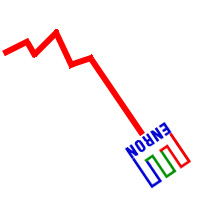
Take for example a study in the magazine, The Speculator, conducted by Victor Niederhoffer and Laurel Kenner. Using companies featured on the front cover of Forbes as their variables, they conducted an experiment to see how a company's performance in the stock market would be affected by their appearance on Forbes. Every company featured on the cover from 1997 to the present were studied. The trend was that companies would perform an average of five percentage points worse than the market in the month following their Forbes cover and in line with the market for five months after that.
"...companies perform worse than the market in the month after appearing on the cover of Forbes."
What does this mean? Simply put, companies who experience hubris also experience a fall. This doesn't simply apply to business though. We can see this in tragedy as well, more specifically, in Oedipus Rex. In the beginning of the play, we see Oedipus as the hero of Thebes, and he knows it. He acts as the end-all, be-all of the city, the supreme power. He truly thinks of himself in the highest regard and lets everyone else know as well. He deserves it too. He did save the city of Thebes from the Sphinx after all. This confidence, however, is partly to blame for his fall. Thus, we see that it is not only people in the business world that are hurt by hubris, but tragic heroes as well. Heroes who have hubris fall, but usually in a much more dramatic fashion

Tuesday, November 1, 2011

What Makes Oedipus Rex a Tragedy?

Oedipus the King


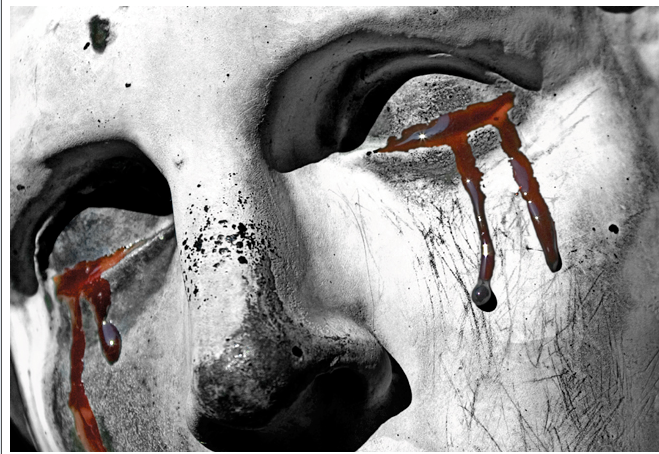
He kills his father, sleeps with his mother, and then gouges his eyes out. Does that not seem tragic? But seriously, what is tragedy? Let's recap.

1. We need a tragic hero. That, of course, is Oedipus. He is the hero of Thebes, vanquisher of the Sphinx. He certainly acts like he thinks he's a hero. Near the beginning of the play, we see Oedipus viewing himself as someone who can do no wrong; he knows everything (or at least, thinks he does.)

2. We need the tragic mistake. Clearly, a mistake is made somewhere. Oedipus, learning his prophesied fate, took every action he could to live as far away from his 'parents' as he could. This, unfortunately, was his mistake. As Aristotle so eloquently put it,
"The change to bad fortune which he [the tragic hero] undergoes is not due to any moral defect or flaw, but a mistake of some kind."
Oedipus was not flawed in his reasoning; he truly didn't want to marry his parents. However, because of these actions, because of this mistake, he wound up fulfilling the prophecy: killing his father and sleeping with his mother.

3. We need the tragic fortune, possibly including death. Check, check, and check. No disputing this one. First, Laius dies, albeit unknowingly, by the hands of his own son, the very son who he flung off a cliff as a baby with his ankles tied. Second, Oedipus sleeps with his mother, even raising children with her, causing Jocasta to hang herself. Death, what a shocker in a tragic story. Finally, Oedipus drives pins into his eyes, all documented in the most gruesome manner possible.

Pretty tragic stuff.

Sunday, October 30, 2011

Tragedy...An Art

The tragic tale of Oedipus is known to many. However, the story of Oedipus is not exclusively told by Sophocles. Many artists, taking inspiration from the tragic tale, have created their own renditions of the famed story. One striking example is a piece by James Mah, Teiresias Accuses Oedipus. Similar to Mah's piece, many artistic renditions of the tragedy focus on pivotal, emotional scenes in the play, the tragic moments. These are the moments that the artists can capture the essence of the characters, when the characters are at their weakest, most emotional moments. This drama is what draws us to these pieces, making them interesting to look at. We can clearly understand the tragedy in these pieces, but we also see a humanity that all of us fear.