Showing posts with label success. Show all posts

Wednesday, November 9, 2011

On Wall Street, Pride Signals a Fall

Hubris in action.
Hubris is defined as excessive self-confidence by the Old English Dictionary. Most would agree, hubris isn't an attribute anyone should strive to posess. Not surprisingly though, we see it in many successful people, especially in the business world. Not only hubris, but hubris that leads to an eventual fall. This makes sense. If you are doing well, if you are successful, then it is natural to feel confident in yourself. As you reach success, you become overconfident in your abilities and begin to fall. As the saying goes, the bigger they are, the harder they fall.

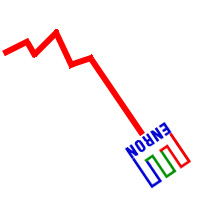
Take for example a study in the magazine, The Speculator, conducted by Victor Niederhoffer and Laurel Kenner. Using companies featured on the front cover of Forbes as their variables, they conducted an experiment to see how a company's performance in the stock market would be affected by their appearance on Forbes. Every company featured on the cover from 1997 to the present were studied. The trend was that companies would perform an average of five percentage points worse than the market in the month following their Forbes cover and in line with the market for five months after that.
"...companies perform worse than the market in the month after appearing on the cover of Forbes."
What does this mean? Simply put, companies who experience hubris also experience a fall. This doesn't simply apply to business though. We can see this in tragedy as well, more specifically, in Oedipus Rex. In the beginning of the play, we see Oedipus as the hero of Thebes, and he knows it. He acts as the end-all, be-all of the city, the supreme power. He truly thinks of himself in the highest regard and lets everyone else know as well. He deserves it too. He did save the city of Thebes from the Sphinx after all. This confidence, however, is partly to blame for his fall. Thus, we see that it is not only people in the business world that are hurt by hubris, but tragic heroes as well. Heroes who have hubris fall, but usually in a much more dramatic fashion

Tuesday, October 18, 2011

Success, Failure, and Tragedy


Alain de Botton makes a witty, eloquent case for finding success in our lives in a presentation he made at TED Global 2009.

In his presentation, de Botton talks about what failure is and how it relates to our lives. He starts by defining a snob. What is a snob? According to Botton, a snob is someone who defines you using only one aspect of your appearance or character to judge you. He then ties snobbery to envy. Envy is a funny thing. Think about the Queen of England. You should be extremely envious of her. She has a bigger house, expensive jewelry, and respect. You, however, are more envious of someone who you can relate to, is your age, of your standing. Because this is when you think, I could have done that. I deserve that too.

This trend thrives in a meritocratic society, or a society that rewards you based on your merits. That's a good thing, right? Take a little talent, add a lot of hard work, and soon, you're on your way to the top. It's literally the American Dream. However, this is a two-sided coin. If we say people are where they are because of their merits and abilities, sure, we say that the people on top deserve it and are wonderful people. Unfortunately, we are also saying that the people on the bottom deserve to be on the bottom, and they're horrible people. They're losers. Failures.

That idea is what many people equate to tragedy as well. Tragedy, according to Botton, is how people fail. So, if failure equals a loser, all of the classic heroes are losers. Romeo, Hamlet, Oedipus, they're all simply losers. This is not the case. Hamlet lost, but he was not a loser. Yes, he fell from his greatness, but it was not because he was a loser. It's this thinking we need to get rid of. Our notions of success and failure come from outside suggestion. We need to make sure that our notions of success should come from ourselves.