Dan Ariely shows us just how much control we actually have over our decisions in his interesting, witty presentation given at TED Global 2008.
Illusions are all around us. Some of the most recognizable illusions are optical illusions. Here is one shown in Dan Ariely's TED presentation:
Which table is longer?
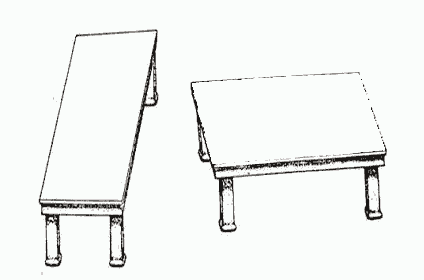 |
| The answer, in fact, is neither. Take a ruler and measure for yourself |
This image deceives our vision, arguably one of our most used mental functions. What if something tricked a mental capacity we use much less often, say, our cognitive thinking? Actually, it happens all the time. These illusions are what Ariely coins as"cognitive illusions". They influence, specifically, our decision making ability.
Take for example the pricing of print and web subscriptions for The Economist. When given the following choices, the percentage of consumers who bought each category is as such:
Print only: $89.00.........................16%We see that the web only and the print and web options are priced the same. Obviously, some mistake was made. Predictably, no one bought the web only option. However, when this 'useless' middle choice is removed, we see a drastic change in the market shares:
Web only: $125.00........................0%
Print and web: $125.00...................84%
Print only: $89.00.........................68%What just happened? People are given virtually the same choices. In both cases, they would get the same product. Why would the print and web choice become less popular after middle choice is removed? Think about it like this. When the web only choice is present, you are made to 'realize' that the print and web choice is actually a 'fantastic' deal. So even if you don't need the web subscription, it 'makes sense' to get the print and web deal, because you are 'saving' money. However, once the web only choice is removed, you pretty much have two choices, with or without web. If you don't need web, why would you buy it? Thus, the lower market share.
Print and web: $125.00...................32%
Descisions like these are all around us, and if we study them, they all of them point to one general principle. The choices you make may already be decided for you. It is not what you want that is the most important thing, it is how those wants are presented to you. This ties into tragedy, as many of our tragic heroes are fated to doom. Fate is what we call it when your decisions are already made for you. Sound familiar?
